Deep Dive #7 - Biochar in nuclear tech

Anwita
Co-founder
Dec 2, 2025
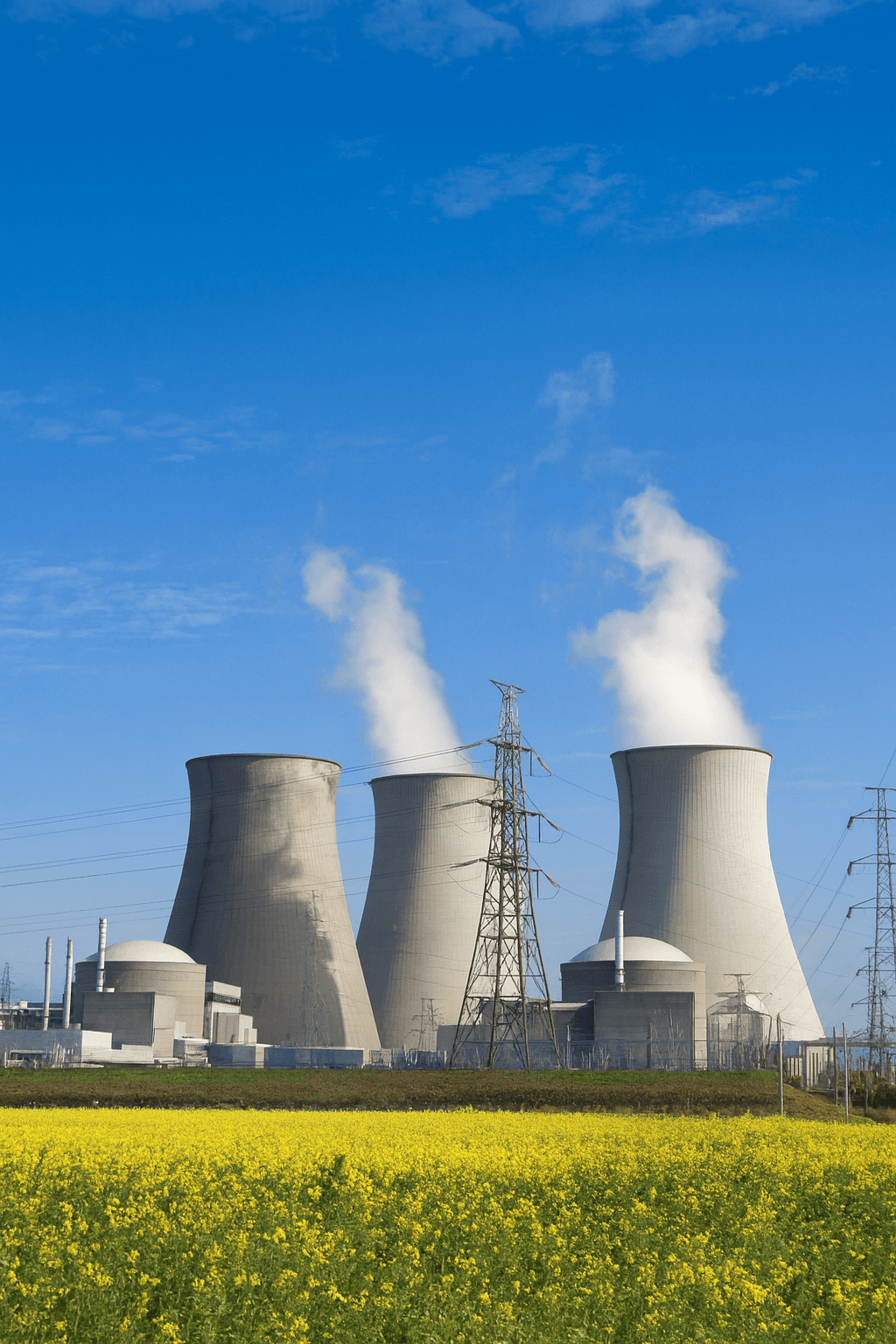
Who would have thought that biochar, classically a niche soil conditioner, would one day find its use in nuclear tech. Peer reviewed articles have recently been shedding light on this, reasons being high surface area, porosity, and functional groups which give biochar special adsorption capacity, thereby qualifying it as a potential instrument for radiation cleanup and for improving energy economy in nuclear uses. This shift is not speculative: recent scientific reviews have begun framing biochar as a credible material for managing radioactive waste streams, immobilising hazardous radionuclides, and even serving as a lightweight shielding component in nuclear environments.
This capability stems from its physicochemical structure - The extensive pore network provides abundant sites for radionuclide entrapment, while functional groups such as carboxyl, hydroxyl, and phenolic moieties facilitate ion exchange and surface complexation. In simple terms, these mechanisms are central to the adsorption of uranium, cesium, strontium, technetium, and related isotopes. Also, a paper mentioned that biochar produced at higher pyrolysis temperatures develops greater surface area and stability, significantly enhancing its capacity to immobilise high-level radioactive contaminants in both water and soil systems. In several case studies, removal efficiencies exceeded 90% for radionuclides like U(VI), with modified biochars achieving even higher performance through mineral doping, oxidation, or magnetic functionalisation
Beyond immobilisation, biochar’s carbonaceous matrix opens the door to radiation shielding applications. Its layered structure and compatibility with high-Z additives allow the formation of composites that mitigate gamma and neutron radiation, offering lighter, safer, and more sustainable alternatives to lead-based materials. Research also points to its catalytic roles in nuclear wastewater treatment, where biochar facilitates oxidation, reduction, and complexation reactions that break down or stabilise radioactive species. As the nuclear sector seeks environmentally responsible and cost-effective tools, biochar stands out as an unlikely yet increasingly validated material with cross-cutting relevance across remediation, shielding, and catalytic processes.
Put plainly, biochar acts like a highly textured sponge with chemically active surfaces. The pores trap radioactive particles, while the surface groups “grab” ions through simple charge attraction and bonding, preventing them from moving through soil or water. When biochar is heated to higher temperatures during pyrolysis, these pores become more refined and the carbon structure more stable, which explains why high-temperature biochars consistently perform better for radionuclide capture.
Its low-cost feedstocks give it a price advantage over activated carbon and specialised sorbents, while modified variants such as boron-enriched or magnetic biochars create clear product categories for wastewater treatment, neutron-moderating composites, or lightweight shielding panels. As these engineered forms integrate into existing nuclear waste-treatment and containment systems, biochar becomes commercially viable not through novelty, but by fitting neatly into procurement channels already familiar to the industry.
Sources
Kordrostami, M., Ghasemi-Soloklui, A.A. Innovative applications of biochar in nuclear remediation and catalysis. Biochar 7, 74 (2025). https://doi.org/10.1007/s42773-025-00463-1

